 thrive and awaken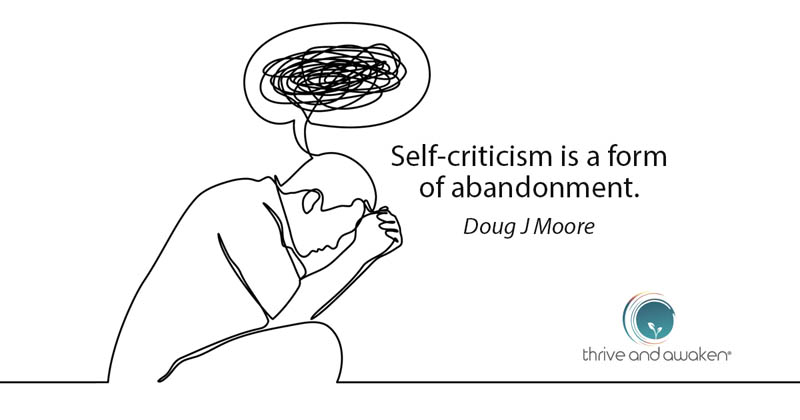
Thrive and Awaken® Tip
Many people believe self-criticism helps them improve, stay motivated, or avoid failure. Yet beneath the harsh inner dialogue is often a deeper pattern of abandoning ourselves in moments when we most need understanding, support, and compassion. Instead of standing beside ourselves during pain, fear, and inadequacy, we attack ourselves for having those experiences at all.
Self-criticism is often learned early in life. We internalize the judgments, disappointments, or emotional absences we experienced from others and begin repeating them internally. Over time, the inner critic can feel normal, responsible, or even necessary for success. Yet constant self-judgment tends to keep the nervous system in Survival Mode rather than helping true growth emerge.
Thriving begins when we learn to stay with ourselves rather than abandon ourselves. This does not mean avoiding accountability or pretending harmful behaviors do not matter. It means meeting ourselves with honesty and compassion at the same time. Real transformation rarely occurs through shame. It unfolds more naturally through awareness, support, and encouragement.
Awakening deepens this shift even further. We begin seeing that the inner critic is often another protective survival pattern attempting to create safety or worth through control and judgment. As awareness grows, we can hold even the critical parts of ourselves with compassion rather than becoming consumed by them.
The opposite of self-criticism is not self-indulgence. It is learning to remain loving and supportive to yourself even during difficulty.
Reflection:
Notice how you speak to yourself when you make a mistake, feel emotional, or fall short of expectations. Would you speak that way to someone you deeply love? What changes when you respond to yourself with support and understanding rather than criticism and abandonment?